MONDAY, 05.11.2026 /Khovar National Information Agency/. On November 6, 1994, the Constitution of the Republic of Tajikistan was adopted through a national referendum. This event was an important proof of the direct participation of citizens in determining the foundations of statehood. The adoption of the Constitution laid a solid foundation for the formation of the legal system of the country, strengthening of independence and determining the main directions of internal and foreign policy of Tajikistan.
- The constitution has a special place in the life of every state and nation and is considered the basis of the political, legal and social system of society. It is not only an important legal document, but also an embodiment of national aspirations, universal values and the path of the state's progress. For the people of Tajikistan, the adoption of the Constitution during the period of independence was considered a great historical event, and played an important role in strengthening the foundations of statehood, ensuring peace and stability, and determining the direction of the country's further development.
After gaining state independence in 1991, Tajikistan entered a new historical stage. The state had important tasks, including the creation of a new management system, strengthening of legality, protection of the rights and freedoms of citizens, and determination of directions for the development of society. In such conditions, the need to adopt a new Constitution, which would be in line with the reality of an independent state, was more felt.
 Despite the political and social problems of those years, the process of drafting the Basic Law continued. After the 16th session of the Supreme Council of the Republic of Tajikistan, necessary foundations were created for the restoration of the constitutional structure and the formation of a new state system. In this process, the contribution of the President of the Republic of Tajikistan, Honorable Emomali Rahmon, who headed the Constitutional Commission, was significant. Serious attention was paid to the issue of drafting the Constitution, taking into account the experience of developed countries, norms of international law and national values of Tajiks.
The President of the Republic of Tajikistan, Honorable Emomali Rahmon, stated in one of his speeches that "the Constitution is a product of the national thought and fundamental values of the people of the country, because this landmark document was adopted precisely thanks to the national thought and identity, tolerance and political courage of people with high legal education, and contributed to the stability of the foundations of an independent state."
It should be said that the importance of the Constitution lies in the fact that it defines the foundations of the state structure, the procedure for the activities of the authorities and the relations between the state and citizens. It is in this important document that the main principles of Tajikistan's statehood, including sovereignty, independence, democracy, rule of law and secularism, are expressed.
One of the important features of the Constitution of the Republic of Tajikistan is the recognition of a person, his rights and freedoms as the highest value. This standard emphasizes that the state and its bodies should conduct their activities within the law and respect and protect the rights and interests of citizens. The right to life, education, work, freedom of speech and other civil rights are among the values that have an important position in the country's legal system.
The Constitution also provides a basis for the regular activity of state bodies. According to it, the state power is divided into three branches - legislative, executive and judicial. The Majlisi Oli carries out legislative activities, the President of the Republic of Tajikistan is the head of state and executive authority (Government). The government performs the functions of the executive power within the scope of its authority, and the judicial bodies ensure justice. Each of these branches has certain powers, and their cooperation is based on the law.
Such a way of organizing power is of great importance for determining the responsibility of state bodies and ensuring the orderly operation of the management system. At the same time, this document recognizes the people as the sole source of state power and considers the participation of citizens in political life and state management important.
The life of society is constantly changing, and with the progress of political, economic and social relations, there is a need to improve the legislative system. The constitution can also be improved according to the needs of the time while maintaining its fundamental principles.
In order to improve the structure of statehood and adapt legal norms to the new conditions, amendments were made to the Constitution of the Republic of Tajikistan in 1999, 2003 and 2016 by means of a national referendum.
The amendments of 1999 laid the foundation for the formation of a bicameral parliament. As a result, Majlisi Oli consisted of Majlisi Milli and Majlisi Namoyandagon. This initiative contributed to the development of the professional activity of the parliament and the improvement of the legislative process.
The amendments of 2003 and 2016 were also aimed at improving the constitutional system and adapting it to the requirements of the time. This process shows that the Constitution, while protecting the basic values of statehood, should respond to changes in society. Of course, any changes should be implemented within the framework of the procedure established by law and taking into account the interests of society.
The value of the Constitution is not limited to its adoption or the existence of legal norms. It is important that every citizen understands the essence of this document and respects the requirements of the law in everyday life. A society in which citizens know their rights and responsibilities, respect the law and value public interests, provides more opportunities for sustainable development.
Increasing the legal education of the population, especially young people, is one of the important tasks of modern society. Young people should know that rights and freedoms are inextricably linked with responsibility. Respect for the rights of others, observance of public order, responsible attitude to education and work, and protection of national interests are among the signs of a high legal culture.
In this context, the family, educational institutions, mass media and other institutions of society can make a valuable contribution to the education of legal and responsible citizens. Because respect for the Constitution begins first of all with knowing it and observing the norms established in it.
The Constitution of the Republic of Tajikistan has a special status in the history of national statehood and has created an important basis for strengthening independence, forming the legal system and determining the directions of development of the society. This fateful document embodies the aspirations of an independent state and is the main guarantor of the rights and freedoms of citizens.
Protecting and respecting the Constitution is not only the duty of state bodies, but it is the responsibility of every citizen of Tajikistan. The higher the level of legal education in society and the more people respect the law, the more favorable conditions will be created for strengthening peace and stability, national unity and the progress of the state.
Therefore, the Constitution can be considered not only as the basic law of the state, but also as a guide for peaceful life, mutual understanding and constructive society. Respect for it is respect for the state, nation and bright future of Tajikistan.
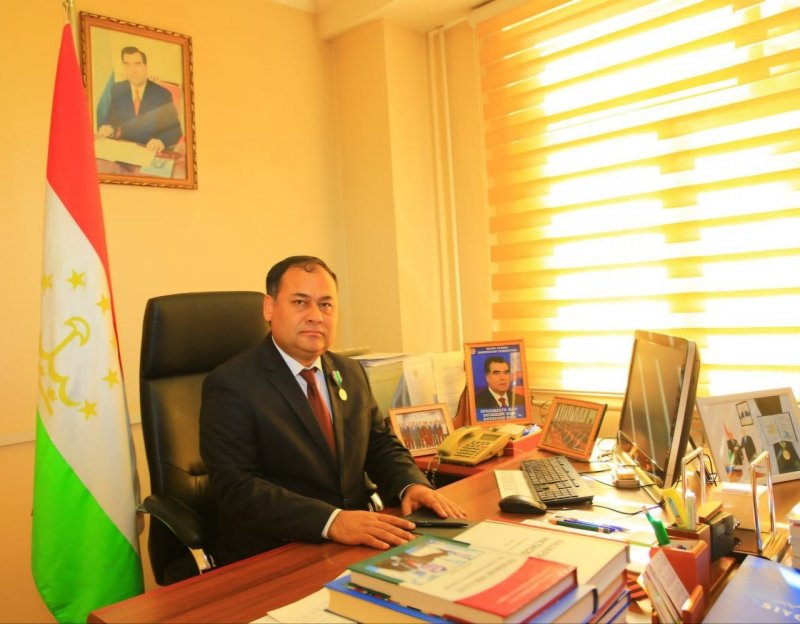
Firuz GAFFORZODA,
Deputy Rector of the University of Technology
Tajikistan on the implementation of strategies
and development of innovative technologies
PHOTO: Khovar National Information Agency
Translated automatically from Tajik.
Source: Khovar News Agency · khovar.tj