

MONDAY, 30.10.2026 /Khovar National Information Agency/. On October 30, 2000, a new unit of the country's national currency - somoni - was put into circulation. The national currency is named in honor of the founder of the first centralized Tajik state, Ismail Somoni (849-907). The choice of name is historically and politically symbolic, Tsomoni refers to the past and conveys the message of statehood, sovereignty and national self-awareness to the present and future generations.
- Money is the result of human labor and is considered one of the greatest inventions of mankind. It includes a basic aspect of economic science. Money plays the main role in the economy, it is the main component of the market. The role of money in society and its functions in the market economy system is that it is a chain connecting all relationships.
 In the economy, the price and value of goods are determined by money. Production of public goods is carried out through money. With the help of money, the organization, distribution and use of national income is carried out through the state budget, taxes and debt.
According to the opinion of economic scientists, metal coins appeared for the first time in the 12th century BC in China as a result of the expansion of commodity production and exchange. Later, archaeologists found coins belonging to the VI-VII centuries BC from the shores of the Mediterranean Sea. These coins were used in the states of Lydia and Aegina, they had the same weight, the same dimensions and the same patterns. Gradually, coins took the form of a circle, which was very suitable for use.
With the demand of time, along with the development of production, the demand for paper money appeared, paper money has many advantages over metal money:
- paper money is lighter than metal money.
- the cost of producing paper money is lower than that of metal money.
From the time of its origin until today, money appears in two specific forms;
- Real money;
- Real money replacement.
There are two theories about the origin of money: the rational theory and the evolutionary theory.
Proponents of the rational theory believe that money is created as a result of exchange between people and based on their consent.
The first founder of this theory was Aristotle. He writes in his book that "In order to ensure the exchange, there must be a unit of measure (measure of value) and this measure must be conditionally accepted."
Another economist, John Kenneth Galbraith, also says that "After precious metals and other objects, the strengthening of the function of money, based on the consent of the people, has arisen."
Thus, representatives of the rational theory believe that money is a special commodity that is created on the basis of consent between people.
Evolutionary theory offers a completely different view of the origin of money. Proponents of this theory are of the opinion that "money has a financial nature and was created regardless of people's wishes and will."
The founder of the evolutionary theory is Karl Marx, who was able to prove the nature of the financial origin of money. For a long time, people could not open the essence of money, they did not know why money has such a great power.
Based on the analysis, scientists of the field gave the following definition of money:
Money is a special universal commodity that performs the role of the general equivalent of all goods and through which the value of other goods is shown.
Before the advent of money, a farmer had to exchange a sack of wheat he had produced to a shepherd in order to own a sheep, which directly required a lot of time and energy.
Gradually, two or three basic goods were separated from all the goods, and they began to play the role of equivalent (equality) of other goods. These goods were leather, salt, goods and iron.
Later, with the passage of time, among the goods, only ground precious metals, coins, played the role of money. These coins were made from different metals such as lead, silver, bronze and gold.
During the statehood of the Somanians, there were also metal coins in circulation. There were more than 30 points of minting shops during the era of Oli Somon. During that period, coins called dinar (gold coins), diram (silver coins) and Ismaili were in circulation.
The peak of the development of monetary transactions in the history of Tajik statehood coincides with the period of the Somonians. Numerous minting centers operated in the territory of the Somoni state, and Somoni dirhams were also used in circulation outside the state.
If the Flag, the Emblem, the National Anthem and the state language represent the national and spiritual sanctity of the state, then the national currency is one of its most important economic and financial symbols.
The national currency allows the state to implement its monetary and credit policy through responsible institutions, to regulate the amount of money in circulation, to influence the inflation process, to establish the banking system and, in necessary cases, to apply financial and monetary measures in accordance with the interests of the national economy.
For every independent state, the national currency is not only a means of economic transactions, but also a symbol of its political and economic independence. For the Tajik nation, the somoni national currency is a sign of the return to historical statehood, national pride, and the reputation of the state and nation.
The first issuance of paper money in the territory of Central Asia, which were called "tanga" like silver coins, dates back to the last years of the reign of the last emir of Bukhara, Said Olimkhan. Paper money with the value of 20, 50, 100, 300, 500, 1000, 2000, 5000, 10000 coins was put into circulation.
In September 1920, the People's Republic of the Bukhara Council was established in the territory of the Emirate of Bukhara, which continued to issue the same paper money of the Emirate with only minor differences, in particular, in the upper part of the inscription "The verdict of the supreme security has been issued" was replaced by the Soviet symbol - the image of a scythe and a bundle of wheat, and the names and duties of the officials were changed. The entire text of these money is written in Tajik language.
Until 1925, there was no banking institution in the territory of Tajikistan. The necessity of opening an independent banking institution with the formation of the Autonomous Soviet Socialist Republic of Tajikistan State Bank of the Union of Soviet Socialist Republics was announced. The establishment of a modern banking system was achieved after the independence of Tajikistan on September 9, 1991 and the establishment of the National Bank of Tajikistan.
In the first years of independence, Tajikistan was in a very difficult political and economic situation. In such circumstances, dependence on the external monetary system limited the country's opportunities to conduct an independent economic policy. Despite the fact that the Republic of Tajikistan gained independence in 1991, until the end of 1993, the currency of the Soviet Union, and later, from January 1, 1994, the cash of the Russian Federation circulated within the territory of the republic.
Among the newly independent states, Tajikistan was the only state in whose territory the ruble of the Russian Federation was used in circulation until 1995. This situation caused a number of serious socio-economic problems: the public debt of the republic is increasing due to the lack of cash to pay wages, pensions and allowances (for the needy class), financing of the economy has practically stopped, and the National Bank of Tajikistan has no ability to conduct an independent monetary and credit and currency policy. Solving these problems and other issues necessitated the introduction of own currency. Therefore, the creation of a national monetary system has become one of the most important issues of state building.
Thus, in order to implement an effective economic policy, accelerate economic changes and build an independent monetary system of Tajikistan, with the personal initiative and support of the President of the Republic of Tajikistan Emomali Rahmon, a decision was made to implement the national currency of Tajikistan.
The first step in this direction was taken on May 10, 1995. On this day, the Tajik ruble was put into circulation as the national currency of Tajikistan. The Tajik ruble was in circulation for about five years. During this period, necessary experience was gained for the formation of an independent monetary system, strengthening of the banking system and preparation of the foundations for the transition to the new national currency. Historically, the Tajik ruble was an important step on the way to the Somoni.
With the stabilization of the political and socio-economic situation of the country after the signing of the General Agreement on the establishment of peace and national harmony in Tajikistan in 1997, the possibility of transition to a new stage of economic reforms increased.
According to the Decision of the State Commission of the Republic of Tajikistan on the implementation of the national currency dated May 6, 1995 "On the procedure for issuing the national currency - the Tajik ruble in the territory of the Republic of Tajikistan" from May 10, 1995, the national currency of Tajikistan was put into circulation.
With the creation of political and economic stability of the state, the National Bank of Tajikistan signed an agreement in 1999 with an influential German company to produce national currency that reflects the past history and present culture of the Tajik people.
By the order of the President of the Republic of Tajikistan dated October 26, 2000 regarding the introduction into circulation of the new unit of the national currency of the country - Somoni, which was named in honor of the founder of the first centralized state of Tajiks, Ismaili Somoni (849-907), was put into circulation from October 30, 2000.
In the Republic of Tajikistan, the currency reform includes two periods;
- May 10, 1995,
- October 30, 2000.
For Tajikistan, the national currency - somoni is a means of payment and economic transactions, the embodiment of the country's difficult and complicated path to independence, a symbol of statehood, national pride, the link between the present and the past of the nation and one of the clear evidences of economic independence. The choice of name is historically and politically symbolic, Tsomoni refers to the past and conveys the message of statehood, sovereignty and national self-awareness to the present and future generations.
On the face of the somoni are the images of prominent figures of Tajik history and culture, architectural monuments, works of art and other cultural elements. Thus, money performs another function in the daily life of a person, it shows the history of a nation to millions of people. Anyone who looks at Somoni, observes historical monuments, the faces of scholars and great men of the nation, and national and cultural symbols. Somoni is also a kind of cultural passport of Tajikistan.
This feature is especially important for the young generation. A young person who knows the history of the personalities embodied in the national currency should understand that every image and every symbol was not chosen randomly. Therefore, the citizen's attitude towards the national currency is a means of mutual trust in the economy. When a citizen accepts somoni, he trusts it as a legal means of payment, when a bank keeps it, he actually keeps a part of the financial system, when the state puts it into circulation, he fulfills his responsibility to the national economy.
It is not compatible with civil culture to desecrate the national currency or make it unusable on purpose. The national currency is not only the personal property of one person, it is a part of the general system of the national economy. At the same time, the issue of attitude to the national currency should be explained with legal and economic knowledge.
Studying the history of Somoni can be an important part of economic and patriotism education of young people. A young person should know why Tajikistan needed a national currency, what role the Tajik ruble played, why the name "Somoni" was chosen, which figures and monuments are on the national currency, and what is the importance of monetary and credit policy.
When an employee receives a salary, an entrepreneur sells a product, a student pays his daily expenses, a citizen pays taxes or a family saves money, Somoni participates in their economic relations.
Every entrepreneur with the development of production, every employee with quality work, every student with education and knowledge, and every citizen with a responsible attitude to the country's economy can contribute to the strengthening of economic independence.
Therefore, the national currency is a symbol and an effective mechanism of statehood.
According to Article 69, Clause 15 of the Constitution of the Republic of Tajikistan, the President "determines the monetary system and submits the information to the Majlisi Milli and Majlisi Namoyandagon".
The national currency becomes really strong so that the national economy is productive, competitive and efficient. When domestic products can supply the domestic and foreign markets, when citizens have financial literacy, the banking system responds to the needs of the times, and trust in economic institutions is stable. Protection and proper use of national currency is the duty of every citizen. We should use money respectfully and carefully and contribute to the development of the national economy of our country. Because the protection of somoni is the duty and responsibility of the society as a whole.
Somoni today embodies three important meanings: an economic tool, a symbol of statehood, and an element of national identity.
In the new paper money, there are pictures of great figures of the modern and past Tajik people, as well as pictures of architectural and historical monuments of Tajikistan, art and crafts of the Tajik people. Paying tribute to the national currency is a civic debt, and respect for the national currency is respect for the state and nation, independence and prosperous future of Tajikistan.
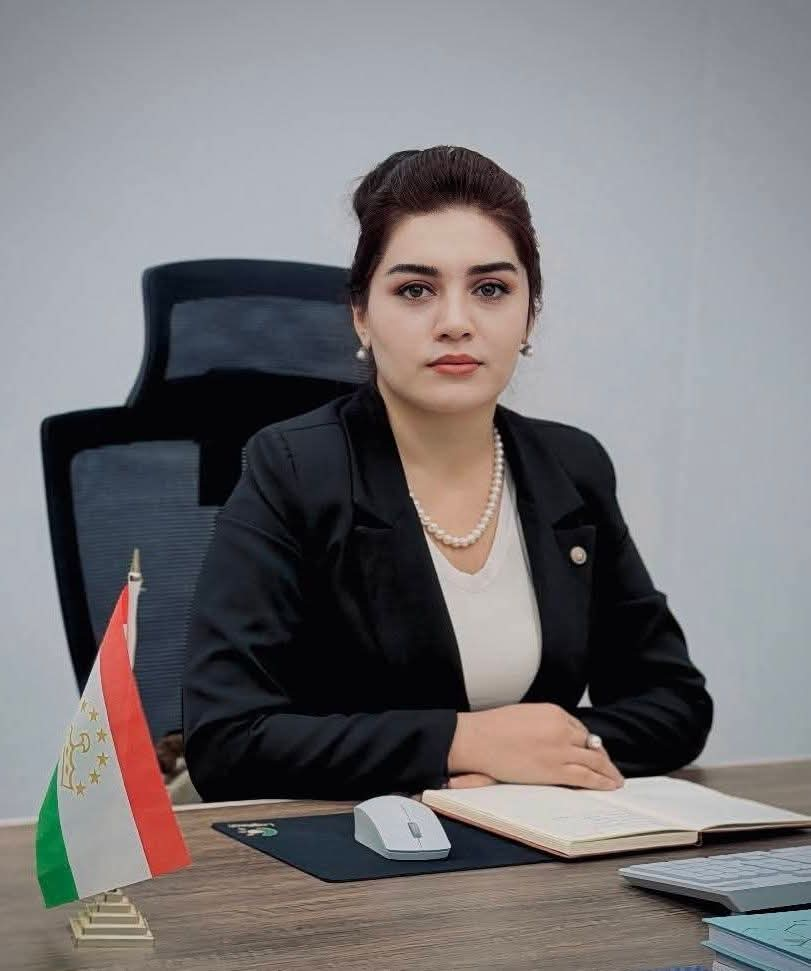
Saadat Qayyumfar
head of the statistics department and the unified electronic database of party members
Executive Committee of the People's Democratic Party of Tajikistan in Dushanbe
PHOTO: Khovar National Information Agency
Translated automatically from Tajik.
Source: Khovar News Agency · khovar.tj


